
Blog
How 3D Filament Storage Protects Print Quality
Dry boxes, vacuum bags, desiccant, hygrometers and warehouse workflow help distributors, OEM programs and print farms keep filament consistent after delivery.
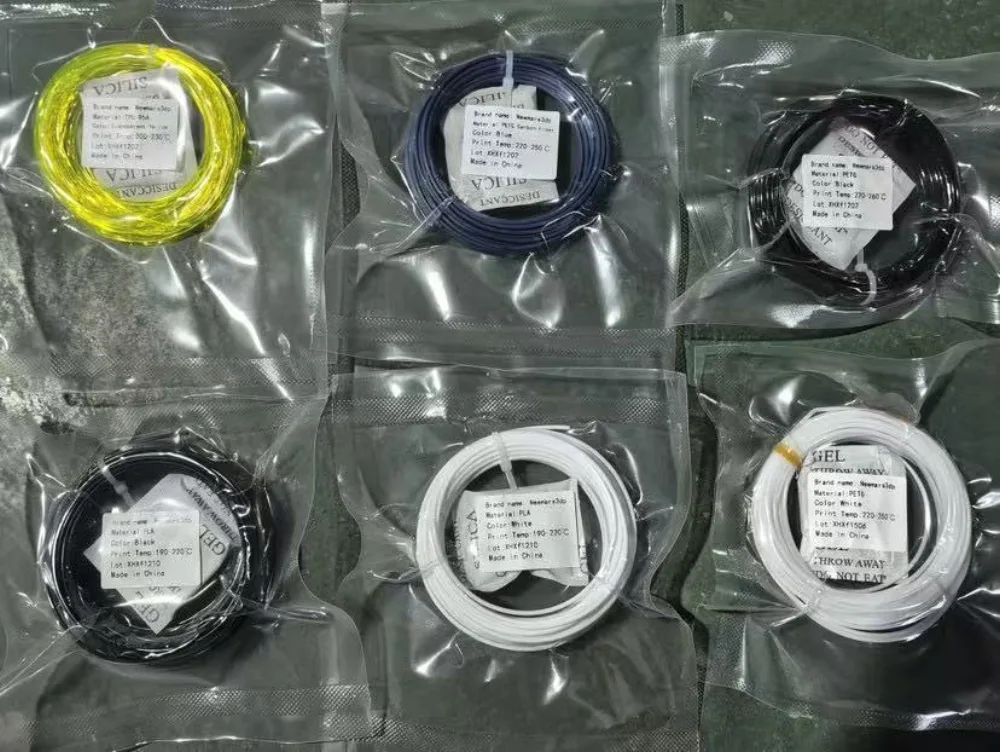
Filament storage is a quality system, not a shelf decision
For wholesale buyers, OEM projects and export distributors, filament storage is part of the quality chain. A spool may leave production in good condition, but poor handling in a humid warehouse, sample room or print farm can change how it feeds, melts and bonds.
The goal is not to promise a perfect number for every climate. The goal is to use repeatable storage rules so approved samples, saleable inventory and customer demonstrations remain comparable.
What moisture does inside the hot end
When absorbed water reaches the hot end, it can turn into steam and disturb extrusion. Common signs include popping at the nozzle, bubbles in the extruded strand, extra stringing, rough surfaces, weak layers and small voids in walls.
These symptoms can also come from slicer settings or machine condition, so teams should compare a known dry spool with the suspect spool before making a batch decision.
Choose storage by material risk
PLA is usually easier to store than PETG, TPU and Nylon, but it still benefits from sealed handling after opening. PETG often shows moisture through stringing and surface marks. TPU can absorb moisture quickly in open air. Nylon is highly hygroscopic and often needs stricter dry-box printing and shorter open time.
A mixed-material warehouse should not use one rule for every SKU. Mark material, color, diameter and batch clearly so the team can select the right drying and storage process.
Use three storage layers: sealed bag, dry box, warehouse control
The first layer is the spool package: resealable bags or vacuum bags reduce air exchange after sampling. The second layer is the local use area: dry boxes or sealed feed boxes protect spools during long prints and repeated tests. The third layer is warehouse control: cartons should stay off wet floors, away from exterior walls and out of direct sunlight.
This layered approach is practical for distributors and print farms because it does not depend on one device. If one layer is opened for inspection, the other layers still reduce moisture exposure.
Desiccant, hygrometer and humidity target
Silica gel is a common desiccant for general storage. For higher-risk materials or long export routes, molecular sieve can be considered because it can perform well in low-humidity conditions. Whatever the choice, saturated desiccant must be replaced or regenerated; otherwise it becomes only extra weight in the package.
Small hygrometers or humidity indicator cards help staff make decisions instead of guessing. Many teams use a low relative humidity target such as about 20–25% RH for dry storage, then adjust according to local climate, material and packaging.
Drying before storage vs storing after drying
Drying is useful when a spool already shows moisture symptoms, but drying alone is not a storage plan. If the spool goes back onto an open shelf after drying, it may absorb moisture again before the next test or shipment.
After drying, move the spool directly into a sealed bag, vacuum bag, dry box or printer feed box. Use material-specific drying guidance so PLA is not overheated and more sensitive materials such as TPU or Nylon are not under-dried.
Warehouse workflow for distributors and print farms
A warehouse workflow should cover receiving, sampling, repacking and rotation. Inspect cartons for water marks and broken seals, record the date a spool is opened, keep reference samples sealed separately and rotate inventory with FIFO rules.
Batch numbers should stay visible through the process. If a customer reports popping, stringing or weak layers, the team can compare the same batch, the retained sample and the customer's storage history before deciding the cause.
Packaging notes for OEM and export orders
OEM and private label orders often travel through sea freight, customs storage and regional warehouses before reaching the printer. High-humidity regions and long routes increase the value of vacuum bags, strong outer cartons, desiccant packs and clear storage notes.
For export buyers, packaging should protect the spool and support traceability. Labels, batch records and sealed samples make it easier to discuss quality with evidence instead of relying on memory.
Quick checklist for buyers
- Confirm how opened spools are resealed after sampling.
- Use vacuum bags or dry boxes for materials that sit between tests.
- Place hygrometers where staff can read them easily.
- Replace or regenerate silica gel or molecular sieve on a schedule.
- Separate sealed reference samples from daily-use spools.
- Keep FIFO, batch number and opened-date records together.
- Review extra protection for sea freight and humid destination markets.
Protecting print quality after delivery
Good filament storage does not replace material quality control, but it protects the quality already built into the product. For DD3 buyers, a simple moisture-control workflow can reduce avoidable claims, improve sample repeatability and make communication between supplier, distributor and end customer more factual.