
Blog
How to Keep PLA Filament Dry Before Printing
Dry storage, sealed bags and sample handling help buyers keep filament print-ready during warehouse and workshop use.
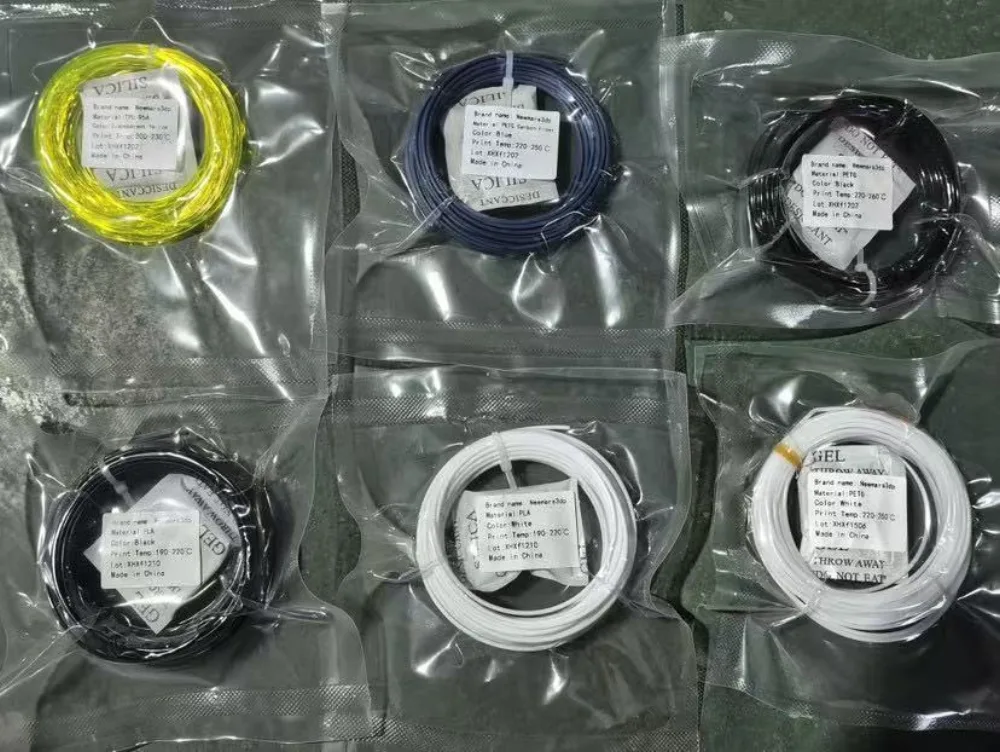
PLA is easier to store, but not moisture proof
PLA absorbs less moisture than TPU, PETG or Nylon, but open spools can still pick up water in humid workshops, sea freight transitions and sample rooms. For distributors, OEM brands and print farms, this becomes a quality issue: the same SKU may print well from one spool and poorly from another if storage is inconsistent.
Dry handling should be treated as part of incoming quality control, not as a hobby tip. The goal is to keep approved samples, warehouse stock and customer shipments in a stable condition until printing.
Recognize wet filament before blaming the material
Wet PLA can pop or crackle at the nozzle, show bubbles in the extruded line, create extra stringing, leave rough or pitted surfaces and reduce layer consistency. Similar symptoms can also come from nozzle temperature, retraction or worn hardware, so compare a known dry spool and the suspect spool with the same file and settings.
If drying improves the suspect spool, review storage, repacking and sample handling before changing the material specification.
Understand material differences
PLA usually needs less aggressive drying than PETG, TPU and Nylon. PETG may string more when damp, TPU can absorb moisture quickly, and Nylon is highly hygroscopic and often needs stricter dry-box printing. Mixed-material warehouses should not use one rule for every product.
Label opened spools by material, date, color and batch. This helps teams apply the right drying temperature and avoid overheating PLA while under-drying more sensitive materials.
Build a practical storage workflow
Store unopened cartons away from wet floors, exterior walls and direct sunlight. After opening, move spools into resealable bags, vacuum bags, dry boxes or dry cabinets with desiccant. Add humidity cards or small hygrometers so staff can see when a box is no longer dry.
Many teams use below about 20–25% RH as a practical target for dry storage, adjusted for local climate. Desiccant should be replaced or regenerated on a schedule, because saturated desiccant no longer protects the filament.
Dry PLA carefully before printing
When PLA shows moisture symptoms, a common drying range is about 40–50°C. Many buyers keep PLA below about 55°C to reduce the risk of deforming filament, plastic spools or cardboard cores. Always follow the dryer and material guidance, especially for matte, silk, filled or specialty PLA.
After drying, transfer the spool directly to a sealed bag, dry box or printer feed box. Leaving it on the bench can undo the drying work during a long print or overnight pause.
Warehouse, transport and QC checklist
- Inspect incoming cartons for water marks, crushed corners and broken seals.
- Record opened spool date, material, color, batch and sample purpose.
- Keep reference samples sealed separately from daily test spools.
- Use FIFO rotation for confirmed wholesale inventory.
- Include simple storage notes for downstream customers.
- Test suspect spools before approving claims or rejecting a batch.
For bulk buyers, dry storage reduces after-sales cost
A clear moisture-control process protects DD3 filament quality after delivery. It also helps buyers distinguish storage issues from production issues, making QC communication faster and more evidence based.